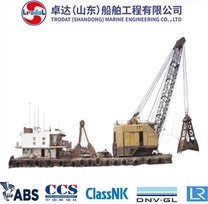

 Bucket-wheel dredgers adopt a continuous circumferential digging mechanism. A large rotating wheel fitted with multiple digging buckets scrapes seabed sediment and feeds material into the suction inlet of the slurry pump. Distinct from cutter-suction dredgers which rely on cutting teeth to break soil, bucket-wheel equipment scoops sediment mechanically. This design delivers exceptionally stable feeding continuity for silt, fine-to-medium sand and loose alluvial deposits, forming steady slurry flow with less air entrainment during normal operation.

Its greatest strength lies in consistent long-run production. The wheel rotates at low-to-moderate speed, scooping material evenly, so slurry density fluctuates far less compared with cutter-head swinging operation. This stability brings multiple downstream benefits: dredge pumps stay closer to their best-efficiency operating zone; pipeline sediment-settling risk decreases; wear-part consumption becomes predictable. Therefore bucket-wheel dredgers are preferred for large-volume sand extraction, reservoir dredging and routine port-maintenance assignments where continuous throughput weighs higher than ultra-high excavation precision.
Still, bucket-wheel dredgers carry clear application boundaries. When confronting hard clay, compacted gravel or abundant large boulders, bucket edges suffer heavy impact wear, digging efficiency declines, and blockages may occur inside wheel pockets. This equipment is not optimized for heavily consolidated strata. Mechanical components including bucket wheel body, heavy-duty gearbox and shaft-sealing assemblies are core wear-prone assemblies. Good lubrication and regular inspection of gear-transmission systems are essential to avoid unplanned mid-project shutdowns.

Many bucket-wheel dredger models support modular disassembly. The complete unit can be broken down into separate hull blocks, wheel assemblies and pump modules for land transport to inland reservoirs, remote rivers and isolated construction sites, eliminating restrictions from narrow water access routes. TRODAT's 14-inch, 16-inch and larger bucket-wheel series leverage this modular philosophy for deployment in inland water-conservancy projects across emerging-market regions.
When comparing with cutter-suction alternatives, project engineers need to make trade-offs. If the site mainly consists of loose sand and silt, and priority is placed on stable output and low slurry-density oscillation, bucket-wheel configuration is competitive. If the seabed contains hard consolidated soil, high-precision depth-control requirements exist, or frequent variation in soil layers is expected, cutter-suction solutions often deliver better overall adaptability. Matching equipment mechanism to geological survey data prevents underperformance after mobilization to site.