
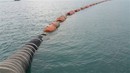

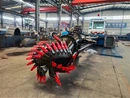

Pipelines installed in shallow waters are subjected to unique environmental loads. These loads stem from near-surface operating conditions and variable hydrodynamic forces. Intense wave action may cause lateral displacement or buoyant uplift of pipelines. Meanwhile, vessel anchors and fishing equipment pose major risks of physical damage. For this reason, design priorities lie in flexibility, abrasion resistance, and impact protection.
Shallow coastal waters typically feature intensive human activities, which further complicate pipeline design. Engineers need to carefully balance multiple influencing factors to safeguard subsea pipeline infrastructure.
Common Pipeline Types for Shallow Waters
Flexible pipelines are widely adopted in shallow-water projects. Their multi-layer structure enables them to withstand dynamic loads without structural failure. Reinforced plastic layers provide ductility while maintaining internal pressure integrity. Concrete-coated steel pipes deliver superior stability; their additional mass counteracts buoyancy forces, making them ideal for shallow regions with strong currents.
Composite pipelines combine lightweight construction with excellent corrosion resistance, performing well in salinity-variable zones such as river estuaries and coastal transition areas. Their non-metallic composition inhibits electrochemical corrosion while retaining mechanical strength comparable to conventional steel pipelines.
These pipeline variants adapt well to shallow-water service conditions and reliably withstand long-term operational stresses in busy coastal zones.
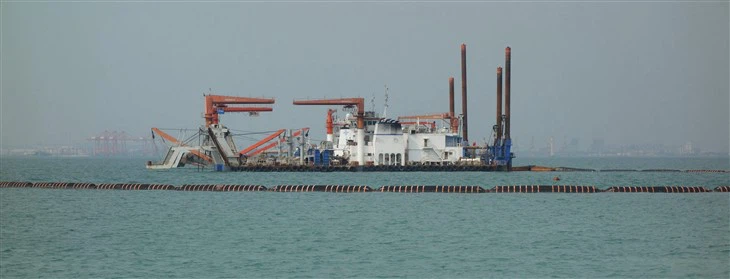
Protective Measures for Shallow-Water Pipelines
Burial and covering techniques are widely applied to shield pipelines from external disturbances. Burying pipelines beneath the seabed reduces exposure to anchors and dragging gear. Rock dumping and concrete mattress stabilization are adopted where full burial is impractical due to hard seabed conditions or environmental constraints.
Anti-corrosion coatings such as fusion-bonded epoxy (FBE) act as a primary barrier against seawater erosion. Combined with cathodic protection systems, they significantly extend service life, even under permanent immersion in shallow marine environments.
Such protective solutions prolong pipeline lifespan and reduce maintenance demands. Thanks to easy accessibility in shallow waters, routine inspection forms a standard part of asset management.
Suitable Pipeline Solutions for Deep-Sea Environments
Deep-sea pipeline projects require specialized materials and designs capable of withstanding extreme hydrostatic pressure at water depths of several thousand meters. Near-freezing low temperatures further challenge material flexibility and wear performance. Deep-sea engineering pushes technological limits, focusing on long-term durability under high pressure and isolated marine conditions.
Material Selection for Deep-Sea Pipelines
High-strength carbon steel remains a fundamental choice with outstanding pressure-bearing capacity. Its performance is optimized when paired with internal corrosion liners such as polyethylene or epoxy coatings. Thermoplastic composite pipes (TCP) have grown in popularity, featuring light weight and strong resistance to corrosion and fatigue under cyclic deep-water loading.
Duplex stainless steels offer enhanced resistance to stress corrosion cracking, a critical risk in deep-sea environments with combined pressure and salt exposure. Their dual-phase microstructure delivers high mechanical strength while maintaining good constructability and weldability.
All deep-sea materials undergo strict environmental testing to ensure stable performance in remote offshore locations.
Deep-Sea Installation Engineering Technology
Remotely operated vehicles (ROVs) enable precise pipeline positioning even under low-visibility conditions. Dynamic positioning systems on laying vessels maintain accurate alignment during pipeline deployment despite strong ocean currents.
Post-laying pressure testing verifies structural integrity before operation starts. Integrated monitoring systems continuously track strain along the entire pipeline route. These advanced tools minimize routine maintenance in deep waters where human access is restricted.
Deep-sea installation requires high-level professional expertise. Engineering teams conduct pre-project simulations to anticipate potential risks, ensuring safer and more efficient deployment.

Influence of Harsh Marine Conditions on Pipeline Service Life
Marine regions prone to storms, strong currents and seismic activity face higher risks of pipeline abrasion, structural failure and displacement. Resilient design adopts flexible configurations that allow controlled movement without compromising sealing integrity. Harsh sea environments test the full lifecycle performance of pipelines, making structural resilience the core design target.
Design Strategies for Severe Marine Environments
Flexible joints allow controlled angular deflection between pipeline segments, absorbing bending stress caused by seabed movement and hydrodynamic loads. Wear-resistant alloys such as titanium composites are used in high-stress components like riser joints subject to frequent cyclic loading.
Fiber-optic real-time monitoring systems promptly detect stress accumulation, enabling predictive maintenance before potential failure. Sensor data supports numerical modeling and optimizes future design schemes for equivalent harsh sea states.
Buffer zone design is also applied to absorb impact energy from events such as earthquakes, forming multi-layer protection for pipeline systems.
Maintenance Methods to Extend Service Life in Severe Sea Areas
Autonomous underwater vehicles (AUVs) perform systematic inspections over extensive pipeline networks, lowering the risks of manned operations. Cathodic protection systems remain essential for mitigating electrochemical corrosion, which accelerates in oxygen-rich rough seawater.
Predictive maintenance integrates sensor data with digital twin technology - virtual replicas of physical pipelines - to accurately forecast failure trends and optimize repair schedules according to annual weather windows.
In harsh marine environments, maintenance relies heavily on intelligent technology. Drones and sensors provide reliable data to support scientific decision-making. This proactive maintenance mode effectively avoids major failures, greatly extends pipeline service life, reduces operational downtime, and improves overall personnel safety by lowering on-site working risks.


