


Modern mainstream dredging methods
1. Use of hydraulic dredging unit for river dredging operation
Hydraulic excavation unit, the professional name of which is hydraulic mechanized earthwork unit. Power distribution system, mud pump system and clear water pump system composed of engineering devices. It is a relatively common equipment in major river dredging companies.
Usually, supporting a 22 kW vertical mud pump and a 15 kW high pressure clear water pump, in addition as a dredging unit will require a mud pump and about 150 mm mud hose, usually using a suitable power transformer to access the local power supply for the arrangement of dredging construction power distribution system.
If the construction site is more severe and there is no power grid, a diesel generator set is required for power supply. The dredging capacity of this hydraulic dredge unit is approximately 400 - 500 m3 per day. The number of machines is influenced by the total volume of dredging and the construction period.
2. Dredger dredging operation
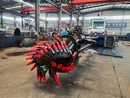
Dredger usually refers to the cutter suction dredger, which has the advantage that it can be operated sequentially from one side of the river to the other side of the river, and the positioning and shifting methods use positioning piles and anchor ropes respectively, and the elevation meter is also known as the water level meter.
The height of the bottom of the trench at the set point is the same as the zero point of the water level meter. Usually, the water level gauge needs to be set at a distance of 500 meters and the water it is in needs to be observed and not easily hit by dredge.
A professional operator reads the water level during construction and maintains a flow of information with the staff on the dredger to control the excavation depth. After positioning the dredger, the cutter head is usually placed under the water to cut and break up the sediment in the river bottom, turning it into mud.
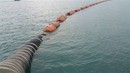
Normally, when the 80 - 120 m3/h cutter suction dredger is operating, its dredging distance needs to be controlled within 1KM. The mud pipe needs to be a Φ300mm steel pipe. The submerged part of the dredging pipe then adopts submerged pipe or floating pipe.
When it comes to the case of bank bending, it is necessary to connect the rubber hose and then extend from the bank part to the area of accumulation through the sandbag frame. Generally open space such as fish ponds, agricultural land is used as the accumulation area to avoid preventing leakage usually using clay weirs and filling edges, usually the height of the accumulated soil should be less than 2 meters.
3. Comparison of two dredging methods
(1) The way of using a hydraulic dredge set is especially suitable for rivers and can be used to cut off rivers because the dredging depth is low and the soil usually consists of silt with high water content.
Accordingly, it is not suitable for dredging navigable waterways, and caution is required when the target river is dredged to a large depth, when excavating highly permeable soils or when there are floodwalls on the banks.
(2) The dredger, compared with the excavation unit, can be applied to unbreakable or navigable waterways and can make up for the shortcomings of the excavation unit, but it is required to fill the soil nearby and the distance of mud discharge is not more than 1km.
(3) The biggest advantage of hydraulic dredging unit is simple structure, convenient construction, easy to relocate, various lines can be moved flexibly, and the quality of the project is easy to control.
However, because of the need for high-volume unit operations, so compared to dredger operations, hydraulic dredger construction period requires clear weather, the construction channel can not be navigable, the construction period requires drainage and other operations.
(4) The advantage of dredger dredging operation is that it can be conveniently constructed underwater without affecting the drainage of existing rivers and without affecting the existing waterways, and compared to dredger sets, it can be constructed in non-extreme weather, even in the rainy season, as long as the construction can be carried out under the safety range.
Accordingly, the disadvantages of dredger dredging operations are that they must be close to the pile, the mud content of the output slurry is small moisture, the tail water volume is large, the drainage workload of the piled soil is large, the existing environment is relatively affected, and the quality control of the construction of underwater operations is difficult.
River dredging sludge treatment and disposal technology distinctio
The treatment of non-polluted river dredging sludge and polluted river sludge
In river dredging projects, the treatment methods used are different depending on whether the sludge is polluted and contains different types of pollutants. If the sludge produced in the water conservancy project is not higher than the relevant standard then the sludge can be used as a resource.
Yard treatment and on-site treatment: Yard treatment means that the sludge produced from river dredging projects is concentrated in one place and transported to a designated river dredging sludge plant for treatment. CSD dredging is the method used for dredging of most rivers.
This method causes a significant increase in the volume of water and mud in the river dredged sludge, while the river dredged sludge itself is slow to consolidate due to its high clay content and poor permeability.
Therefore, the key issue of the landfill treatment method is how to achieve the separation of water and mud, shorten the settling time of river deposited sludge, and finally accelerate the landfill treatment, which is the key issue of the landfill treatment method.
Trodat can providing all kinds of discharging pipes, HDPE pipes, rubber hose, internal armored hose, self-floating hose, wear-resistant rubber hose, and floater for pipes, any inquiry please email shawn@trodatgroup.com.
The following methods are usually used for the field treatment method: no dredging of the sediment, covering the sediment and draining the overlying water. Treatment by dewatering and other operations.
However, treatment options need to be tailored to the site. In-situ cover treatment is not recommended for waters or water with high shallow flows. Therefore it is not suitable for large deep water areas.


