

Basic Introduction to Hydraulic Transfer Cases for Dredgers
I. Core Functions: Power Hub for Multi-System Coordination
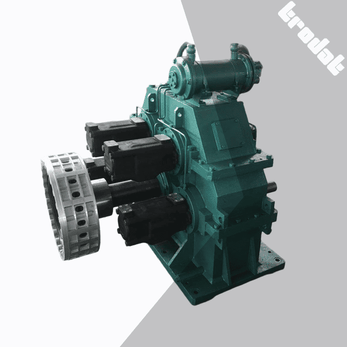
The hydraulic transfer case is a core component of a dredger's power system, whose primary function is to convert the single power source of the engine into multi-path hydraulic power output, driving key equipment such as cutters, mud pumps, and winches to operate in coordination. Its specific functions include:
Power Distribution and Precise Allocation
Through a gear transmission system, the transfer case can distribute engine power proportionally to different hydraulic pumps. For example, in a cutter suction dredger, part of the power drives the cutter hydraulic motor to cut soil (with power reaching over 1500kW), while another part drives the mud pump to transport slurry (with a flow rate up to 14,500 m³/h). This design avoids power waste from traditional single-pump drives, ensuring efficient operation of the equipment under various working conditions.
Dynamic Load Balancing
During dredging, loads such as cutter cutting force and mud pump suction resistance change in real time. The transfer case is equipped with built-in torque sensors and pressure compensation valves, which can automatically adjust the power distribution of each output shaft to ensure system stability. For instance, when the cutter encounters hard soil layers, the transfer case prioritizes increasing the flow of the cutter hydraulic pump while reducing mud pump power to prevent overload.
Safety Cutoff and Redundancy Protection
Transfer cases are usually equipped with electromagnetic clutches or hydraulic control valves, which can cut off power transmission within 0.2 seconds in emergency situations such as engine failure or pipeline rupture, preventing equipment damage. Some high-end models also adopt a dual-circuit design, where a backup pump can automatically switch on when the main pump fails, ensuring continuous dredging operations.
II. Technical Characteristics: Reliability Assurance in Extreme Environments
Dredgers operate long-term in marine environments with high salinity, high humidity, and strong vibrations. Hydraulic transfer cases must therefore possess the following core characteristics:
Corrosion Resistance and High Protection
- Material Innovation: Gears and shaft components are made of ultra-low carbon martensitic stainless steel (e.g., S41595), with a corrosion rate of ≤0.01mm/year in salt spray tests-over three times the service life of ordinary stainless steel.
- Sealing Technology: The case integrates fluororubber O-rings and PTFE coatings, achieving an IP67 protection rating to resist wave impact and slurry infiltration.
Efficient Transmission and Low Energy Consumption
- Gear Precision: Adopting AGMA Class 10 precision gears, with a transmission efficiency of ≥98%, reducing energy consumption by over 15% compared to traditional gearboxes.
- Thermal Management System: Integrating oil coolers and temperature sensors, the system controls oil temperature within 55°C through forced circulation oil circuits, avoiding hydraulic oil degradation caused by high temperatures.
Modular Design and Maintainability
- Quick Disassembly: Using an independent pump pad design, hydraulic pumps can be replaced without disassembling the main body of the transfer case, reducing maintenance time by 70%.,
- Intelligent Diagnostics: Connected to the ship's control system via a CAN bus interface, it real-time monitors oil temperature, oil pressure, and gear meshing status, extending predictive maintenance intervals to 5,000 hours.
III. Typical Application Scenarios: Full-Scenario Adaptation in Dredging Projects
Hydraulic transfer cases perform differentiated functions in different types of dredgers, with the following typical application scenarios:
Cutter Suction Dredgers
- Core Task: Driving the cutter head to cut riverbeds and the mud pump to transport slurry to disposal sites (with a discharge distance of up to 5,500 meters).
- Configuration Features: Adopting a multi-output shaft design. For example, the "Changshi 7" is equipped with a 12ZF2426 transfer case, which simultaneously drives 12 A2F250 hydraulic pumps to control equipment such as the cutter, traverse winch, and steel pile trolley.
Trailing Suction Hopper Dredgers
- Core Task: Suctioning slurry through a draghead and storing it in the hopper, suitable for deep-sea channel dredging.
- Technical Requirements: The transfer case must integrate clutch functions to quickly switch between loading and unloading modes, while providing power for ballast water pumps and cabin door hydraulic systems.
Environmental Dredgers
- Core Task: Cleaning contaminated sediment in lakes and ports to reduce secondary pollution.
- Special Design: The transfer case output shaft directly drives the environmental cutter (with a rotational speed of ≤15rpm) and provides low-pressure power for slurry dewatering equipment to achieve solid-liquid separation.
Multi-Functional Engineering Vessels
- Core Task: Combining dredging, piling, lifting, and other composite functions.
- System Integration: The transfer case provides high-frequency impact power for pile hammers through a speed-increasing gear (with a ratio of 1:1.29) and drives crane hydraulic motors through a speed-reducing gear (with a ratio of 1:1.53).
IV. Industry Trends and Technical Prospects
As dredging projects move toward deep-sea and intelligent development, hydraulic transfer case technology shows two main trends:
Hybrid Power Integration
For example, the Transtech HM series transfer cases integrate motors and hydraulic couplings, enabling zero-emission operations in pure electric mode and reducing fuel consumption by 20% in fuel mode through energy recovery.
Digital Twin and Predictive Maintenance
Manufacturers such as Parker Hannifin have developed digital twin models for transfer cases, which can simulate gear stress distribution under different working conditions, predict potential faults 3–6 months in advance, and reduce maintenance costs by 30%.
As the "power heart" of dredgers, the technological progress of hydraulic transfer cases directly determines the efficiency and economy of dredging operations.