
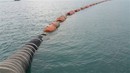

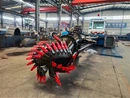

1, The inner and outer layers of the high-pressure dredging hose wall are oil-resistant rubber, and the middle is (2 to 4 layers) cross-woven steel wire or winding steel wire. Poor quality of the hose will appear: uneven wall thickness of the hose; steel wire weave too tight, too loose or too few layers of steel wire; hose deformation after pressure (elongation, shortening, or bending deformation) is large; the outer layer of rubber airtightness is poor, resulting in corrosion of the steel wire; the inner layer of rubber sealing is poor and makes high-pressure oil easily into the steel wire layer; rubber layer and steel wire layer adhesion is insufficient. All of the above will make the hose reduce the bearing capacity, and eventually burst at the weak point of the tube wall.

2, Hose and joint assembly, the amount of buckling and buckling speed are not properly selected, or the structure of the joint and, material, size selection is not reasonable, can lead to a hose and joint pressure too tight or too loose, resulting in early damage to the joint.
When assembling, if the amount of buckling is too small, that is, the joint and the hose between the pressure is too loose, the hose may come out of the joint at the beginning of use under the action of oil pressure; if the amount of buckling is too large, the joint and hose pressure is too tight, easy to lead to local damage to the inner layer of the hose, resulting in cracks, high-pressure oil will enter the steel wire layer directly from the rupture, and then along the gap between the steel wire flee to the tail of the jacketed spray, or has been fleeing along with the steel wire layer to a certain place It will accumulate and make the outer layer of rubber bulge or even rupture. When the hose and the joint are assembled, if the buckling speed is too fast, it is easy to cause damage to the inner rubber and fracture of the steel wire layer, so that the hose is damaged prematurely in use.
3, In addition, the unreasonable design and poor processing quality of the joint will also cause damage to the inner rubber; if the material of the joint is not selected properly, it is easy to produce deformation during the buckling process, which will affect the buckling quality and shorten the life of the hose.

Improper use
Under the premise of quality assurance, if used improperly, it will also greatly shorten the service life of the hose. In practice, most of the damage to the high-pressure dredging hose is caused by improper use.
1, Subject to frequent and violent pressure shock. High-pressure hose burst, generally not due to the static pressure is too large, but with the pressure shock of the degree and number of violent. Construction machinery in operation, the oil pipe will repeatedly appear in the case of a sudden increase or decrease in oil pressure, which constitutes a frequent pressure shock on the oil pipe, resulting in increased damage to the oil seal of each ministry, blistering, and rupture of the hose and the loose leakage of the pipe joint phenomenon. Therefore, when operating, the valve stem should not be triggered too hard and must be gentle.
2, The use of oil temperature is too high. Construction machinery operations, hydraulic systems due to power loss, and fluid heating, coupled with the influence of the outside temperature (especially in summer), the oil temperature can rise sharply. The higher the fluid temperature, the easier the rubber aging, elasticity deterioration, strength, and sealing performance decline, the hose will soon burst. Therefore, in the operation, when the hydraulic system temperature rises too high, too fast, should promptly identify the causes, to be excluded; summer operations, especially continuous operations, should take the necessary cooling measures.
3, Hose selection, installation is not reasonable. In the replacement of high-pressure hose, the length of the hose selected, the number of steel wire layers, joint shape, and size should be reasonable, and should minimize the degree of hose bending; in tightening the joint nut, do not make the hose twisted, too much bending and twisting will greatly reduce the service life of the hose; some parts prone to friction should take protective measures to prevent the hose burst due to wear.


