
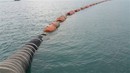

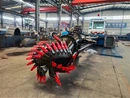

The roles of the main engine and auxiliary engine of dredging boat are: the auxiliary diesel of winch suction dredging boat drives the hydraulic system and generator, the split gearbox drives the reamer to rotate and cut the mud, the main diesel drives the dredging pump to suck up the mud and sand through the pipeline, through the lift pipeline and convey it out. Application scope of winch suction dredger: used for sand pumping, reservoir dredging, river dredging, sedimentation pond dredging, fish pond silt cleaning, etc. It mainly uses the boat power to drive the pump to produce high-pressure water into the spray pipe and shoots out the water through the spray gun installed on the spray pipe to blow and stir the silt deposited at the bottom of the river into turbid water, and then pumped away by the mud pump, so as to play the role of dredging.
The common models of small river dredging boats are 6 inches, 8 inches, 10 inches, and 12 inches, which can achieve the workload of 50, 100, 200 and 300 square meters per hour respectively.
The following construction conditions and working conditions are generally considered for the development of suitable small and medium-sized river dredging boats:
(1) The width of the river opening, the water depth, and its change rule.
(2) Height of riverbank and length of side slope.
(3) Nature of river bed and sediment and soil hardness
(4) The distribution of trees and buildings along the banks.
(5) The height, size, and passability requirements of the bridge and gate on the river.
(6) the presence of nearby mud disposal sites, the requirements for mud concentration, and mud disposal methods
(7) bank access, mechanical operation, site, and the requirements for mechanical access to the site.
(8) power, energy, and logistics maintenance conditions to ensure.
(9) the busy degree of the river, whether to allow intermittent operations.
(10) Construction season and climatic conditions, etc.
The above factors will directly affect the operation mode of the dredging boat, the form and arm length of the working device, the size of cutting force, the composition and size of the discharge system, the choice of power, the walking, and transportation mode, etc.


